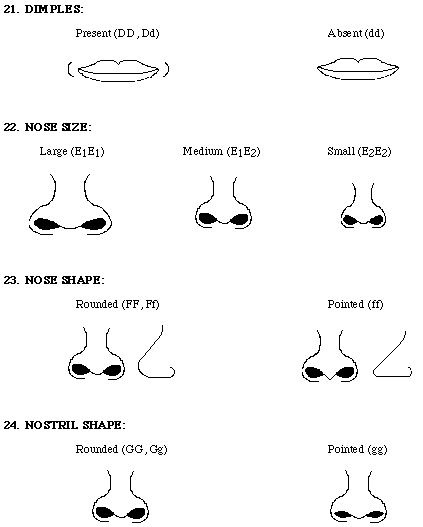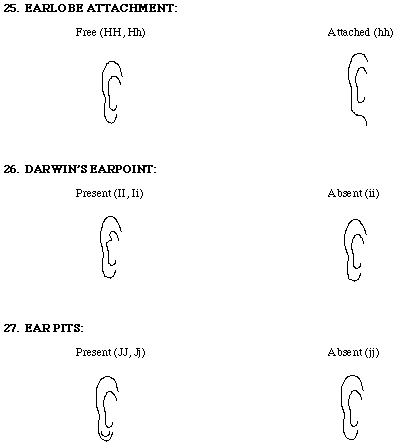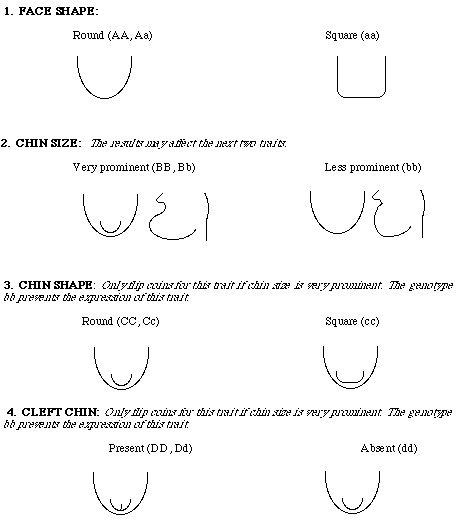
Both versions begin with the assumption that
the P (parental) generation (you and your paartner) is heterozygous
at all loci and that independent assortment occurs (no linkages),
We will begin by examining OUR personal phenotypes and estimate
our genotypes from this so as to create a more realistic outcome.
Students flip coins to determine which allele they will pass
on to the F1 generation, and draw the resulting child's face. Several inheritance patterns are represented
in this simulation, and it is important to review these. Inheritance
of the traits used in this simulation have been simplified to
serve as a model; actual inheritance is far more complex and
students may need to be reminded about this in case they get overly
concerned about their own traits.
Materials
Why do people, even closely related people, look slightly different from each other? The reason for these differences in physical characteristics (called phenotype) is the different combination of genes possessed by each individual.
To illustrate the tremendous variety possible when you begin to combine genes, you and a classmate will establish the genotypes for a potential offspring. Your baby will receive a random combination of genes that each of you, as genetic parents, will contribute. Each normal human being has 46 chromosomes (23 pairs - diploid) in each body cell. In forming the gametes (egg or sperm), one of each chromosome pair will be given, so these cells have only 23 single chromosomes (haploid). In this way, you contribute half of the genetic information (genotype) for the child; your partner will contribute the other half.
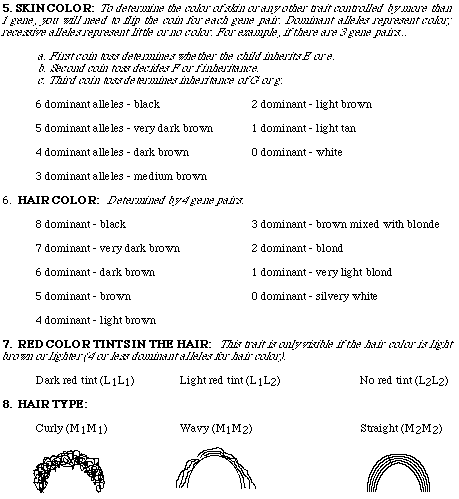
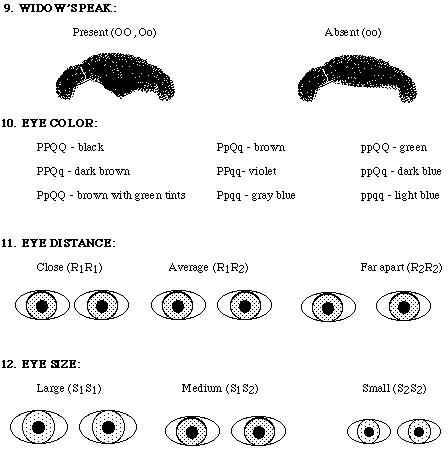
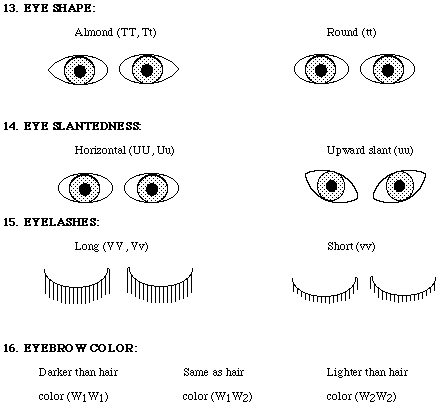
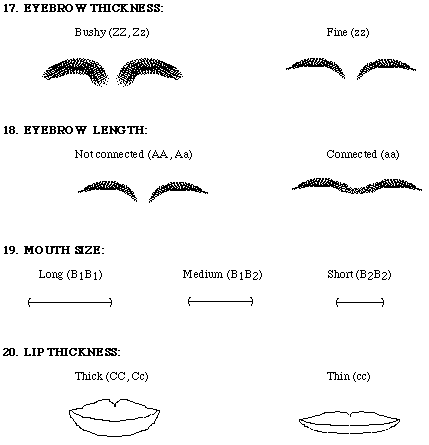
Because we don't know your real genotype, you will compare your face (with the help of your partner) to the traits. For each trait, if you have the recessive form, put down the two recessive alelles in the chart. If you have the dominant trait, flip a coin: heads you are homozygous dominant (two CAPITAL alelles); tails you are heterozygous for that facial trait (one letter of each). Which one of the two available alleles you contribute to your baby is random, like flipping a coin (if you are heterozygous). In this lab, there are 36 gene pairs and 30 traits, but in reality there are thousands of different gene pairs, and so there are millions of possible gene combinations!
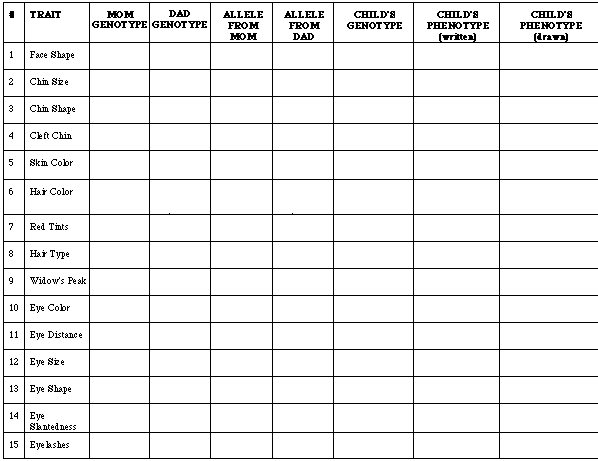
Record all your work on each parent's data sheet.
Parents _____________________________ and ______________________________
Child's gender _____ Child's name _________________________________
Fill in data table as you determine each trait described in the Guidebook. Do not simply flip the coin for all traits before reading the guide, because some traits have special instructions. Believe it or not, it will make your life easier if you follow directions. In the last column, combine the information and draw what that section of the child's face would look like.

a. dominant
b. recessive
c. incomplete dominance
d. polygenic
a. trait # 2 (chin size)
b. trait #8 (hair type)