Download Printable Version
Lab 1b: Body Organization and Terminology
PURPOSE:
To review the organizational pattern of the human body, to review its organ systems and the organs that comprise each system, and to become aquainted with the terms used to describe the relative position of body parts, body sections, and body regions
LEARNING OBJECTIVES:
1. Locate and name the major cavities and identify the membranes associated with each cavity
2. Name the organ systems that comprise the human organism
3. List the organs included with each organ system
4. Describe the general function of each system
PROCEDURE A: Body Cavities and Membranes
1. Review Cpt 1, pages 18-22, 98-100 in 'Martini' plus Internal Body Cavities pages of the website
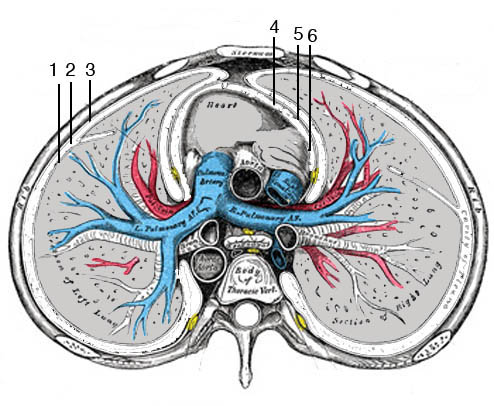
2. Label figures 1.1 & 1.3 below and paste into your Lab Notebook
3. Vocabulary: Locate and Identify the following terms by describing where in the body you would find them and placing these descriptions in your Lab Notebook: dorsal cavity, cranial cavity, spinal cavity, ventral cavity, thoracic cavity, abdominopelvic cavity, pelvic cavity, diaphragm, mediastinum, oral cavity, nasal cavity, orbital cavity, middle ear cavity, parietal pleura, visceral pleura, pleural cavity, visceral pericardium, parietal pericardium, pericardial cavity, visceral peritoneum, parietal peritoneum, peritoneal cavity
4. Complete Parts A and B of the lab in your Lab Notebook
PROCEDURE B: Organ Systems
1. Review the images of the various organ systems on pages 6-11 in 'Martini'.
2. Make a list of the different systems in your Lab Notebook and describe the function(s) of each.
3. Try to locate the following organs in your body: Integumentary system: skin, hair, nails; Skeletal system: bones, ligaments, cartilage; Muscular system: skeletal muscles; Nervous system: brain, spinal cord, nerves; Endocrine system: pituitary gland, thyroid gland, parathyroid gland, adrenal gland, pancreas, ovaries, testes, thymus gland; Digestive system: mouth, tongue, teeth, salivary glands, pharynx, esophogus, stomach, liver, gall bladder, pancreas, small intestine, large intestine; Respiratory system: nasal cavity, pharynx, larynx, trachea, bronchi, lungs; Circulatory system: heart, arteries, vein, capallaries; Lymphatic system: lymphatic vessels, lymphatic nodes, thymus gland, spleen; Urinary system: kidneys, ureters, urinary bladder, urethra; Male Reproductive system: scrotum, testes, epididymis, vas deferens, seminal vessicles, prostate gland, bulbourethral gland, penis, urethra; Female Reproductive system: ovaries, fallopian tubes, uterus, vagina, clitoris, vulva
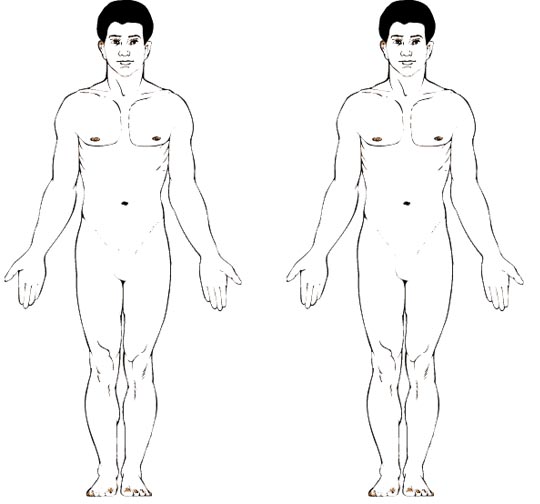
4. Using the list from item #B2, Draw and Label organs into the blank bodies. You have four bodies so use all of them so that you can clearly see all systems. You may omit the skeletal and muscular systems and the peripheral nerves, veins/arteries, and lymph vessels, as well as the integumentary system.
5. Complete Parts C and D of the lab in your Lab Notebook.
6. Examine the three Manikins and identify the various structures that are labeled.
7. As you complete the lab, Review the "Lab Objectives" from the handout and write a synopsis of the lab addressing the three objectives (you can omit #3). 7