Download Printable Version
Lab 13: Vertebral Column and Thoracic Cage
PURPOSE:
To examine the vertebral column and thoracic cage of the skeleton and to identify the bones and major features of these parts.
LEARNING OBJECTIVES:
1. Identify the major features of the vertebral column
2. Name the parts of a typical vertebrae
3. Distinguish between cervical, thoracic and lumbar vertebra
4. Identify the parts of the thoracic cage
5. Distinguish between true and false ribs
PROCEDURE A: Vertebral Column
1. Review Cpt 5 pages 142-143, and the Skeleton Outline page
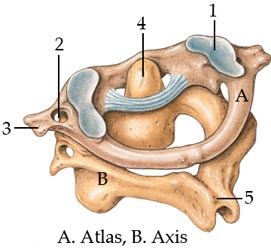
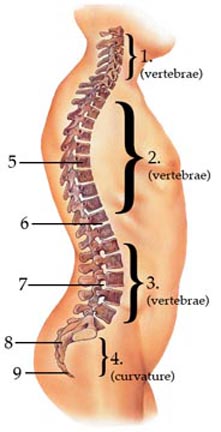
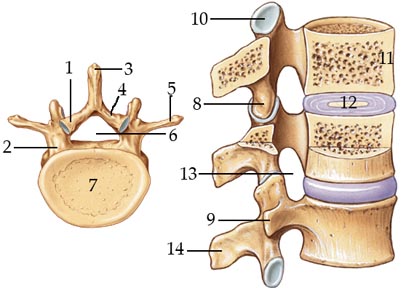
2. Print out images 13.1-13.5 (Below), paste into your NoteBook and Label
3. Examine the vertebral column of the human skeleton and locate the following parts and features. At the same time, locate as many of the corresponding parts and features on your own skeleton as possible: vertebrae, intervertebral disks, vertebral canal, sacrum, coccyx, intervertebral foramina, cervical vertebrae, thoracic vertebrae, lumbar vertebrae, pelvic curvature
4. Examine the available samples of cervical, thoracic and lumbar vertebrae and locate the following: body, pedicles, vertebral foramen, spinous process, vertebral arch, transverse process, superior articulating process, inferior articulating process, transverse foramina, Atlas, facets, Axis, odontoid process
5. Examine the sacrum and coccyx. Locate the following features: Sacrum, superior articulating process, dorsal sacral foramen, ventral sacral foramen, sacral canal, median sacral crest, sacral hiatus, Coccyx
6. Complete parts A of the Lab Handout
PROCEDURE B: Thoracic Cage
1. Review Cpt 5 pages 143, and the Skeleton Outline page
2. Print out images 13.6 (Below), paste into your NoteBook and Label
3. 5. Examine the thoracic cage of the human skeleton and locate the following parts: rib, head, facet, tubercle; True rib; False rib; Floating rib; costal cartilage; Sternum, manubrium, body, xyphoid process
6. Complete Part B of the Lab Handout
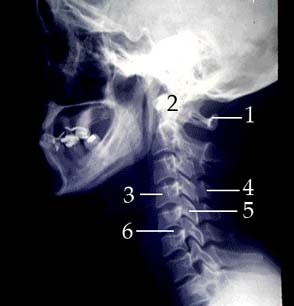
7. Print out the x-ray image, paste and label it into your NoteBook
8. List the structures found on the bones of the Vertebral column and thoracic cage (those listed above) and describe their individual functions; ie. specific articulation or muscle attachments
9. As you complete the lab, Review the "Lab Objectives" from the handout and write a synopsis of the lab addressing the five objectives.